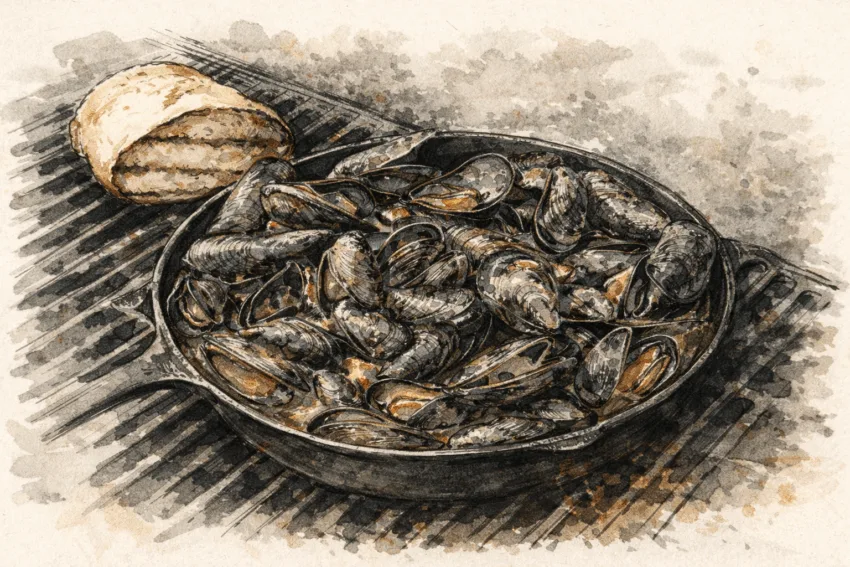
The sound they make when they hit the pan is always the first thing I notice. Sharp, almost percussive. It reminds me of elementary school music class—castanets clicking together by small hands trying to find rhythm. Mussels do the same thing when they meet heat. A quick, unmistakable signal that something has begun. There’s no easing into it. You commit, or you don’t.
Cooking mussels has never felt like following a recipe so much as doing something people have been doing the same way for a long time. This kind of food comes from places where the sea was close and time was limited—coastal kitchens where sauces mattered more than technique and bread was always part of the plan. The mussels open when they’re ready and take on whatever you put in the pan. Garlic, oil, wine, herbs—there are variations, but the logic stays the same. Heat, timing, trust. Savor.
What’s left once they’re done tells you everything. Shells open, broth pooling at the bottom, bread already torn instead of sliced. Nothing arranged, nothing precious. Just the satisfaction of knowing you didn’t rush it. Some foods don’t ask to be reinvented. They just ask you to pay attention.
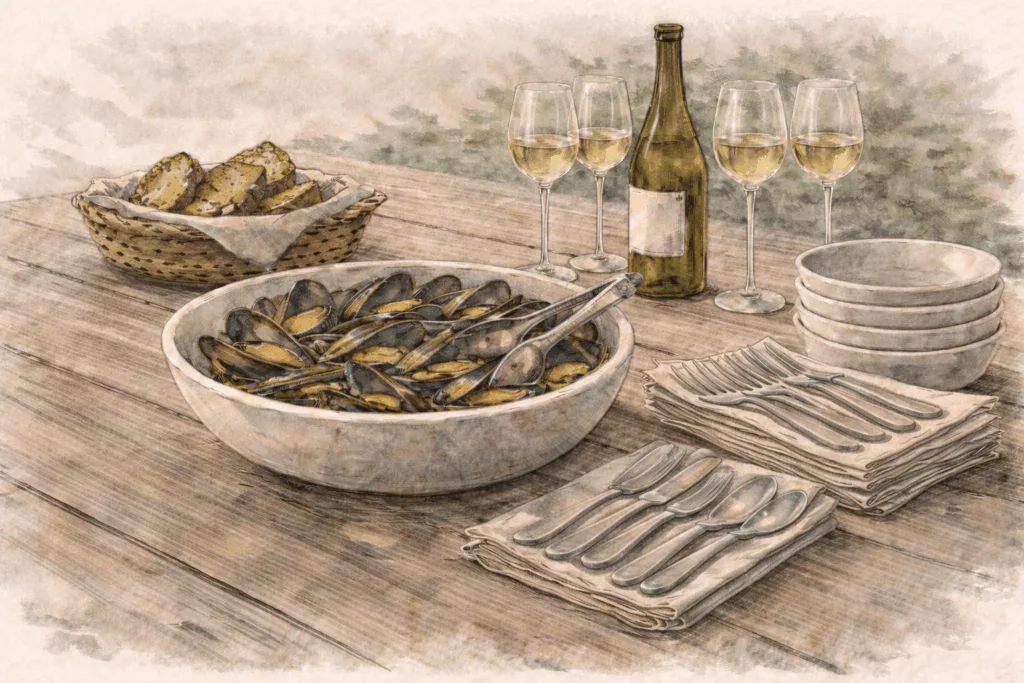
Setting the Scene
Late evening, when the heat has dropped but the table is still warm. Music playing low enough that it never takes over. Lingering without checking the time. Mussels in the middle, bread passed back and forth, a crisp glass of white wine poured again before the last one has a chance to warm. Nothing formal, nothing rushed. Just food that makes sense in that moment.
End scene
This piece was inspired by my experience grilling mussels.
Kendra Trammel is a writer and brand steward documenting moments of recognition, pattern, and grounding clarity as they emerge.