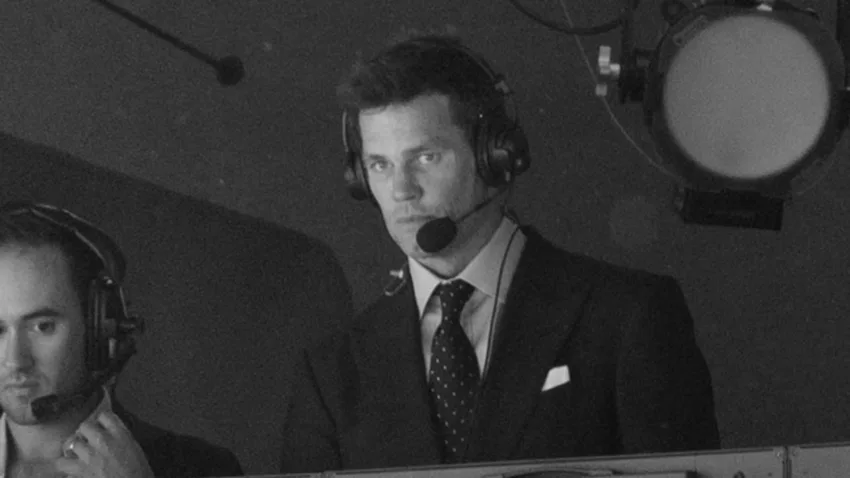
Editor’s Note (written December 21, 2025): This piece was originally drafted in September and sat in my Drafts folder immediately following Week 1 of the NFL season. Since then, the situation discussed below has evolved. An update appears at the end.
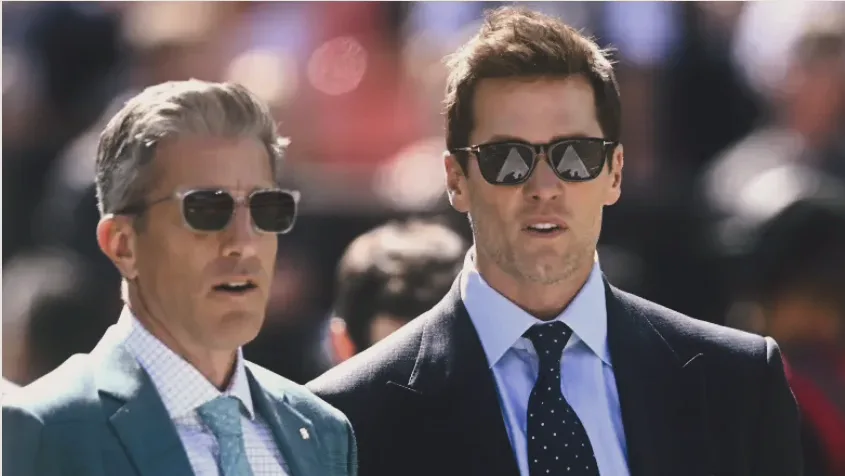
I’m naturally enthusiastic. I get lit up about what I love, and I don’t apologize for that anymore. Not in relationships, not at work, not when someone’s breaking down a good play like it’s gospel.
That’s what struck me while watching and listening to today’s Washington Commanders vs. New York Giants matchup on Fox, which coincidentally coincided with Tom Brady’s Year Two, Week One return to the booth. Despite what I read online in other critiques, I didn’t find him to be trying too hard. He still loves the game. And it shows. In his voice. In his hand motions. In the way he lights up when a player reads a route perfectly or opens the lane no one else sees.
Brady’s Passion and Enthusiasm in the Booth
Passion and enthusiasm in a broadcast booth can be delicate to balance. When rhythms don’t fully align, exchanges can feel uneven, not because of intent, but because live commentary requires constant adjustment. Moments of silence or missed handoffs often reflect differences in energy, timing, or perspective rather than disrespect.
What stood out to me in today’s game was how challenging it can be to volley effectively when one voice is speaking from lived, in-the-moment experience inside the game, while the other is operating from a more traditional reporting cadence. Those differences can create pauses that are more about alignment than ability.
This setup is genius for Brady. A job that doesn’t take up all his time. Something that lets him stay close to the game without being consumed or injured by it! I get that. It’s why I love the 10-month schedule of my day job. It’s why so many creatives and thinkers need a metaphorical off-season to stay sharp in-season.
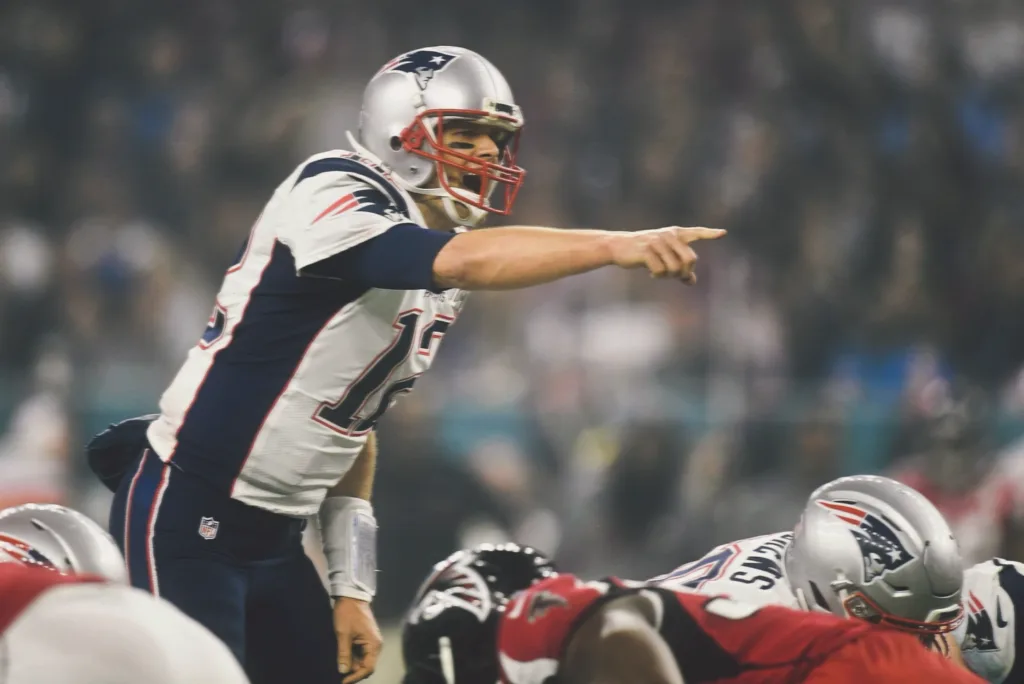
There’s something about authentic enthusiasm that sometimes makes people uncomfortable. Especially when it’s not performative, not polished, not neatly packaged in corporate-sounding cadence, but real. I’ve dealt with it all my life, especially when starting a new job.
It happens like clockwork. I arrive, happy and excited for the possibility of what we can all do as a team. The vets roll their eyes at my ideas, my happiness, my positivity. It’s like they’re thinking, “Give it a year and your mindset will be just like ours.” You can hear it in someone’s voice. See it in their eyes. Feel it in the pause between the words. I used to let it diminish my shine, but not anymore.
Which is why, as I sat with the Week One broadcast, the long-anticipated return of Tom Brady in the analyst’s chair, I couldn’t stop myself from watching it again, trying to find the negatives I kept reading about on social media. Being at home sick, I’ve had plenty of free time, and I’ve watched it several times since then. Not to catch another stat or dissect a play (enough armchair coaches are doing that around the internet), but to listen to his rhythm again and the rhythm with his co-host.
Tom showed up.
That much is clear.
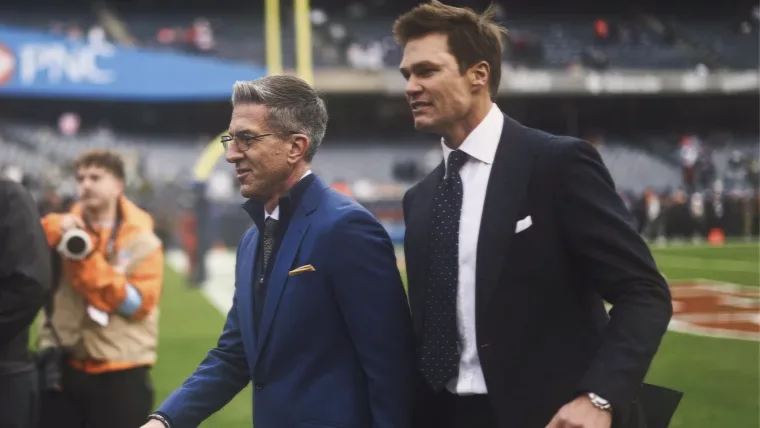
He was prepared, engaged, dialed in, and above all else, still in love with the game, so very in love with it. You could hear it in the way his voice lifted every time he spoke. You heard it when he broke down offensive strategy with the kind of precision only a former quarterback with a few Super Bowl rings under his belt could offer.
And the reason I know it is genuine is because his voice shifts. There is a deeper, slower cadence when he is in reflection mode. It is the same voice I have heard plenty of times in interviews, that deep baritone Barry White-type voice that makes my head snap up like “Hellooooo. And who do we have here?”
But when he is in the booth and something lights him up, the pitch changes, quickens, and it is less Barry White, more “Holy shit, I can’t believe I get to do this!” That contrast is what makes it electric because you can feel him crossing the line from analyzing the game to actually reliving it in real time.
He wasn’t just analyzing football.
He was feeling it.
And I totally get it. I’m a former runner. I haven’t competed in a track event for well over thirty years, but even now, if I watch a meet, even on television, my body reacts. My heart races. My hands tingle. I get nervous as hell, like I’m the one about to step onto the track. That never goes away. Especially when, like Brady, I was expected to be the best of the best. So I can only imagine what it must feel like for him, only a few years removed from actually playing, and still tethered to the game.
The Bowling Ball Effect
There were moments where Tom’s insight landed like a clean strike; smooth delivery, centered impact, but the booth fell quiet. There was no volley. For some viewers, that silence might have felt unusual. It initially felt off, but maybe it isn’t about silence at all. Perhaps it’s about recalibrating our expectations of what a booth should be.
“Sometimes presence is revealed most clearly in the silence between two voices.”
What Tom Could Do (And Likely Will)
And that’s where Tom, ever the tactician, has room to shine even brighter. Tom can naturally close the loop. He doesn’t have to wait for someone else to volley back to validate his point; his rhythm and knowledge carry their own weight.
He can fill in the impending lag with something like “You probably noticed that safety rotation, too. That type of little shift changes everything. That’s the stuff I love.” Loop closed.
That’s presence. Brady has the instincts to fill the gap with something authentic. He’s not just a guy reading stats.
The Manufactured Voice vs. The Living Pulse
And since I’m being honest, and when am I not, let’s talk about contrast, not just in commentary, but in the way things land on us. Presentation isn’t only visual; it’s vocal too.
As I was watching, I recalled seeing some comments online that mocked Brady’s actual voice, as well as Erin Andrews’. I get it. There are some people whose voices annoy me, but it’s not for the reasons most people online were pinpointing for Tom and Erin.
So many announcers sound alike; they all share the same pitch, cadence, and rise only when the crowd roars. It’s polished, sure, but it’s also predictable. Brady doesn’t sound manufactured. He sounds like someone who still lives (and loves) the game, bringing a fresh, enthusiastic pulse to the booth.
Tom’s Enthusiasm Isn’t a Flaw. It’s His Edge.
What I noticed most? Tom’s enthusiasm isn’t over the top. It’s not exaggerated. It’s real.
I can relate.
When I love something, when I care about something, I light up, and I no longer apologize for that. If I get hyped, I’m not going to downplay my joy. That vibe, that energy, that joy? It’s a gift. It draws people in. It makes life somehow feel richer because I’m not surpressing what feels natural.
So yes, Tom’s still getting used to this role. Yes, the rhythm will tighten.
What I saw wasn’t someone fumbling or trying too hard. I saw a man leaning into what he loves in real time, and not hiding it behind memorization of stats or an announcer’s voice. We have front row seats to a fresh perspective from one of the best ever to play the game.
Honestly, that’s the kind of commentary I want.
Not someone mimicking the style of formulaic talking heads. Not someone manufacturing engagement. But someone who actually feels the game the way those of us watching from home do.
At the end of the day, it is easy to reward the safe cadence, the pre-scripted rise and fall, the predictable voice that only comes alive when the crowd does. But that is not presence, that is performance.
“Credibility lives in the pairing of insight with genuine aliveness.”
What matters is enthusiasm rooted in knowledge, the ability to recognize that a so-called ordinary play can be just as thrilling because of what it sets up next. He has the foresight and hands-on experience to hypothesize what comes next. That is where credibility lives, in pairing insight with genuine aliveness.
And that is the bigger point to consider: do not punish people for bringing their full energy to the table. The world has enough monotone, placeholders. Celebrate the ones who light up with what they love, because they are the ones who inspire us to see, hear, and feel differently.
The Final Thought
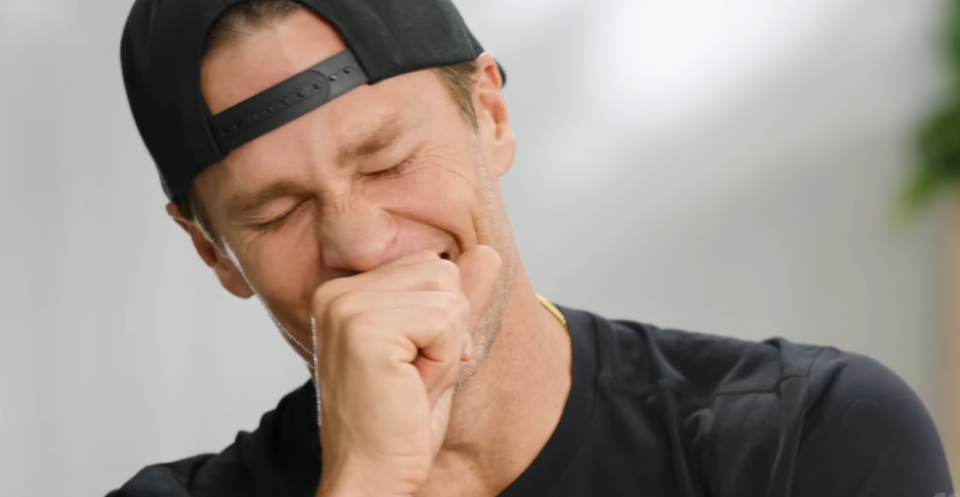
Tom Brady is having fun. The banter. The laughter in his voice at times. It’s refreshing. Tom may not be playing football anymore, but he’s still mentally on the field. He’s still processing plays at light speed, still seeing things that the rest of us only catch on the third replay, if at all. He’s just speaking it now instead of executing it. I’m a new-ish fan.
However, I will go on record and say that if Brady makes anymore on-air comments about Michigan being “The greatest football team in America,” as an Ohio State loyalist I will happily close that loop. #GameOnBrady
Update (December 21, 2025): Since this article was written, the online chatter around Brady’s performance in the booth has shifted noticeably. What was once widespread criticism of his voice and delivery has given way to regular praise for his presence and performance in the booth.
While many are only now coming around, this evolution reinforces the original point of this piece: the qualities that make him effective were there from the start, they just required a different lens to appreciate. The success that’s being acknowledged today was already visible early on, long before it became the popular opinion.
Let this also serve as a reminder to pump the brakes before rushing to judgment, especially in a medium as subjective as broadcasting. Before piling on, it’s worth asking why a performance is landing the way it is. Is it unfamiliarity? A departure from what we’re used to? An expectation shaped by who came before? Too often, early reactions say more about our own biases and comfort zones than they do about the quality of the work itself.
P.S. Ohio State is on their way to once again prove that they are, in fact, the greatest team in America.
Kendra Trammel is a writer and brand steward exploring modern life, attention, and the inner frameworks that guide how we think and decide.
This article was originally drafted September 9, 2025.